Your cart is one of the last things a customer sees before they pay. It should feel like the rest of your store, same colors, same voice, same polish. Yet for a lot of merchants, the cart is the one part of the storefront they're afraid to touch, because customizing it has traditionally meant editing theme code.
Why editing theme code is the hard way
Customizing a cart through Liquid and CSS works, but it carries real costs:
- It's fragile. A small mistake in a theme file can break the storefront, and the damage isn't always obvious right away.
- It doesn't survive updates. Switch themes or accept a theme update, and your careful edits can vanish.
- It creates a bottleneck. If every tweak requires a developer, small improvements get postponed indefinitely, the copy stays generic, the colors stay slightly off, and the cart never quite matches the brand.
For most merchants, the result is a cart that's "good enough" and never revisited.
What no-code customization changes
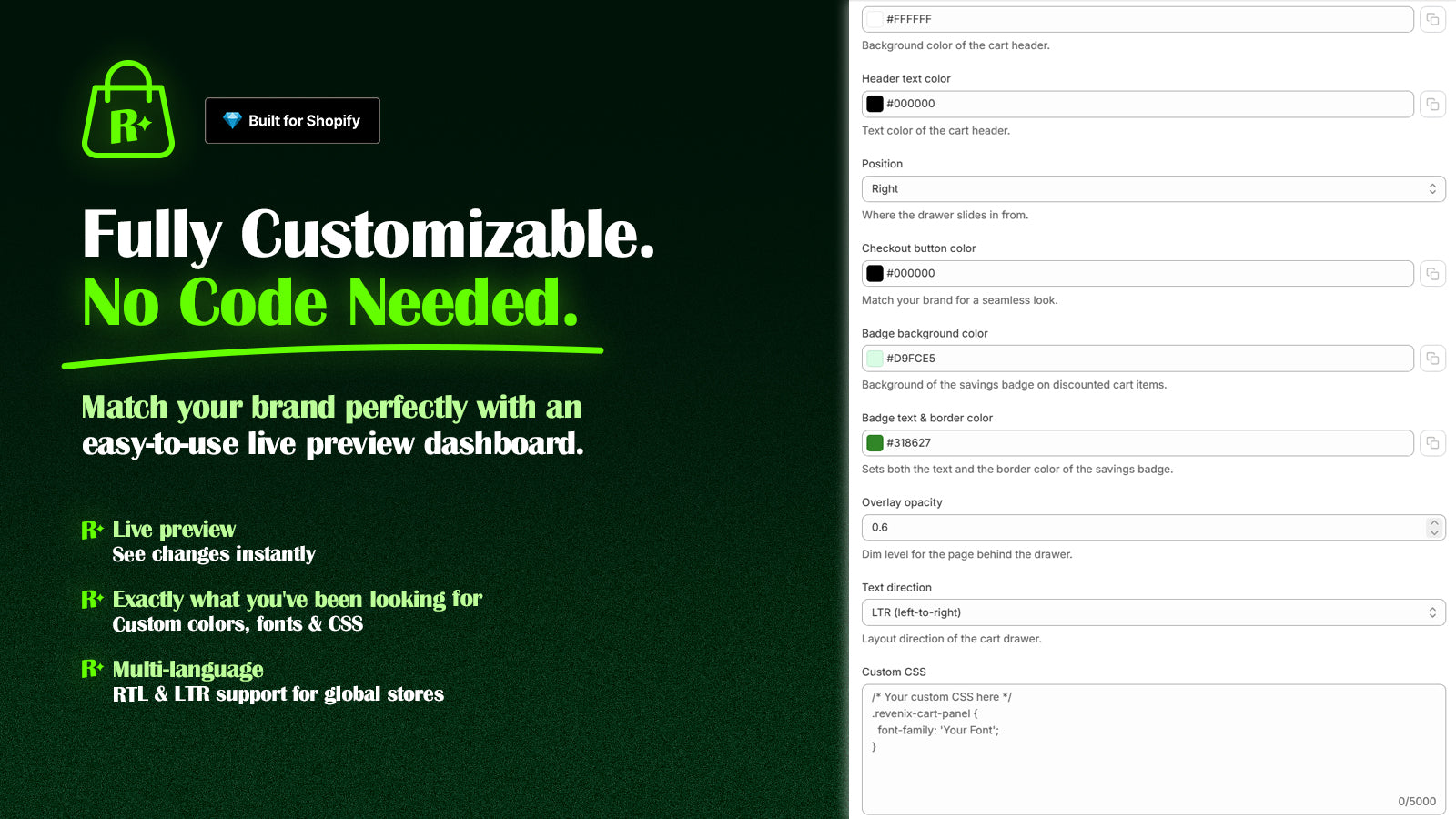
No-code customization moves cart styling out of theme files and into a settings panel. Instead of hunting for the right CSS selector, you pick a color, toggle a feature, and see the result in a live preview.
That shifts who's in control. The person who actually understands the brand, usually the owner or marketer, can make changes directly, in minutes, without risking the storefront.
Typical things you should be able to control without code:
- Colors and accents so the cart matches your palette, including buttons, progress bars, and highlights.
- Copy and messaging, the heading, the free-shipping message, the button labels, in your own voice and language.
- Which features appear, so you can turn a countdown timer, gift bar, or recommendation block on or off as your strategy evolves.
- Layout details like position and overlay, so the cart feels native rather than bolted on.
Safe to experiment, easy to iterate
The quiet benefit of no-code control is that it makes experimentation cheap. When changing the cart's headline or button color takes thirty seconds and carries no risk, you actually try things. You test a clearer shipping message. You match your seasonal campaign colors. You adjust based on what you see.
That iteration loop, cheap, safe, fast, is where most of the long-term gains come from. A cart you can freely tune will always outperform one you're afraid to touch.
Your brand shouldn't stop at the cart
Every other page reflects your brand. The cart deserves the same treatment, and it shouldn't require a developer, a staging theme, or a leap of faith to get there. No-code customization simply lets the right person make the right change, safely, whenever they need to.